My name is Evan Vogel. I'm a 22 year old College student attending UW-Milwaukee. I am majoring in Journalism but my passion is Hip-Hop. I write my own songs and poems and just genuinely love the art form. Contact me on Facebook, Twitter or my blog if you want to get to know me or just want to find some new music! Peace and Love.
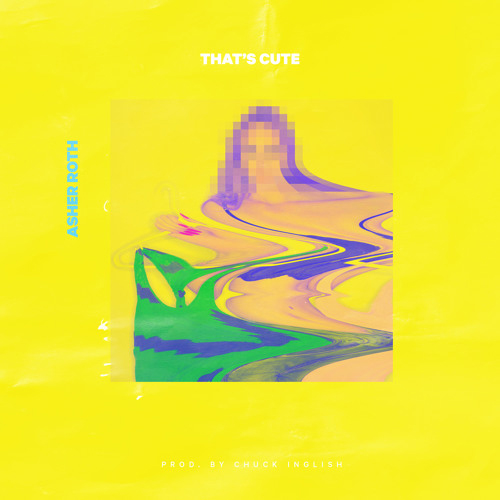
After a very experimental phase that led to the LP Retro Hash, it seems that Roth is switching it up yet again. Well, returning rather. He dropped the official audio for a new track, “That’s Cute” which is produced by long-time collaborator, Chuck Inglish. Asher comes through with bar after bar of boastful, witty lyricism and wields his words as though they are artillery. The final product turns out to be a shining light for fans of the college-loving rapper. He also provided the subtle comment on soundcloud that more music is on the way. Check out the new track below.
In 2013, Ghostface Killah and Adrian Younge teamed up and released an LP by the name of Twelve Reasons to Die. It followed the tale of a 1960’s Ghostface persona, Tony Starks and was based off of a comic by the same name. The LP was solid enough to warrant a second chapter in the story and it is set to be released on July 10th. Yesterday marked the second single release off of the project after “Return of the Savage”. The new track is entitled, “Let The Record Spin” and it definitely feels classic. It features fellow Wu-Tang Member, Raekwon. Check it out below.
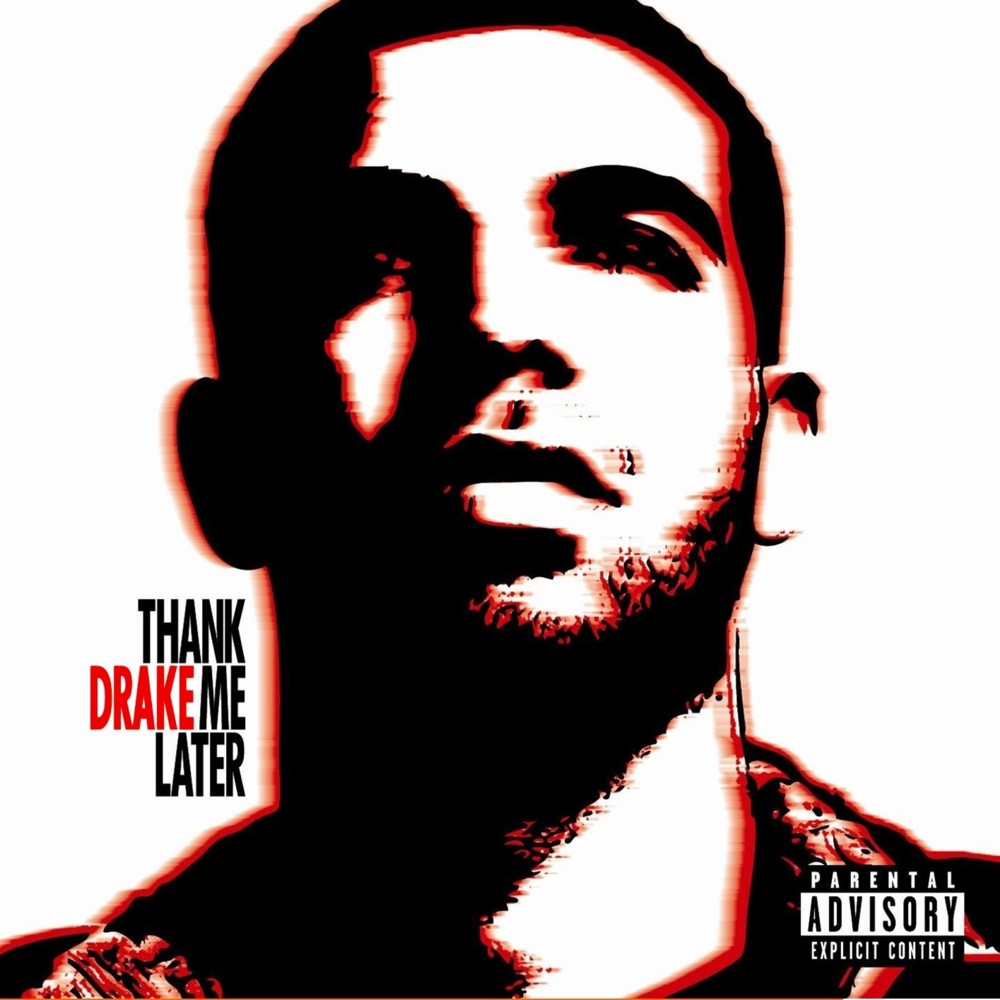
Unfortunately, Hip-hop has always been known by many for the way artists talk about women, money and drugs. In all fairness, much of the genre is littered with misogynistic tendencies and a ridiculous urge to indulge in the finer things in life, however shamelessly. Now, while I’m not one to tell people how to spend their money, I would much rather hear about what comes with that fame. I think most would agree with me saying that stories about an artist’s rise to fame and their struggle with everything it includes like the alienation of past friends, relationship quarrels, or a fear of what the future could hold, are much more listenable than a grocery list of things that an artist spent their paycheck on. Maybe I’m in the minority, but listening to Drake’s introspection and the relational struggles of fame on his official debut album Thank Me Later, is incredibly worthwhile.
While the album naturally has its moments of selfish lyrical dribble, the 6 God’s main topic of conversation is reflection. Now that I brought reflection up, I have to get this out of the way — this album reflects more than Kanye West does in the mirror each morning. This isn’t necessarily a bad thing. His reflection and heartfelt regrets come off as honest and you really do get the picture of a person who hasn’t come to grips with the new reality he lives. It has all of the required ingredients to creating and telling the story of a man who has reached a point of success he never even thought existed and trying to live up the expectations people naturally are going to place on him. His comfortability in this new lifestyle is definitely not assured. Drake’s new status has him looking twice at the people around him before calling them friends and his relationships with women seem to be doomed.
Right from the opening track “Fireworks”, he is putting everything out there on the track. Touching on relationships, his money, family, divorce, death, the search for himself and even more. The hook, carried by Alicia Keys provides a sombering but uplifting melody to keep the mood right. The second track, which is likely my favorite on the whole project, is “Karaoke”. It depicts a relationship that dimmed and withered away beneath the bright spotlights of fame. This is where Drake is different from most rappers. He completely comes across as heartbroken and vulnerable. This emotional presentation of self has become much more apparent and accepted today, but before 2010, most rappers and listeners would look at Drake as a soft crybaby (made apparent by endless Drake memes).
Drake is adjusting, not only to the new life he has found himself in the possession of, but he is also adjusting hip-hop in general. Drake’s style is his own. His delivery isn’t particularly hard-hitting but rather, soft and enveloping. The beats are less of a selection and more of a carefully crafted and laid out palette of offerings. Containing airy synths, light piano chords and some snappy drums, Drake’s voice is able to slide in between it all as if it is simply another key on the board. There times where Drake makes sure people know he can rap with the rest of the A-List. Songs like: “Over”, “Thank Me Now”, “Miss Me” and “Up All Night” showcase this ability and show Drake in a much snappier and more wide-awake light.
By the end of the project, Drake has likely connected with the people that the rest of the hip-hop greats don’t target. The people who have lived an average life, in safe neighborhoods with friends, girlfriends and a house. You realize that the things that Drake is going through aren’t THAT terrible. After all, he is dealing with the consequences of having a lot of money and a lot of fame. It is eye-opening to hear how that life has altered his perception of life and how damaging it has been to relationships along the way. At this point, Drake wasn’t sure if he should be thankful for the fame or if he should despise how it changed his life so quickly. Me personally, I was thankful for the album that sprouted from this mental struggle when it came out five short years ago — and I will also thank you now sir.
Making a statement is a common goal for many artists. It has to be. With so many different people vying for their credibility in such a polarizing medium, there has to be a way for you to stand out and apart from the exponentially increasing herd. Songwriter/rapper/producer Mike Shinoda is no stranger to the need of proving himself; in fact, for him, it has been ever-present throughout his career. Even though his name may not be readily identifiable by you, you likely know him as one of the frontmen for rock group, Linkin Park.
Shinoda is the technical engineering guy when it comes to Linkin Park’s music, as well as – to put it simply – the guy who raps. No one thinks of Linkin Park as a rap group, yet this is where Shinoda found his niche, as a rapper. When the group formed, the label executives even considered confining Shinoda to the keyboards and production, saying the band didn’t need the added hip-hop element. So started this need to prove himself as a necessary element to Linkin Park’s sound and I don’t think anyone can say the group would be anywhere near as successful if their formula had changed.
Eventually, this proving of himself as a useful co-vocalist to one of this generation’s most successful bands led to the awareness of himself as a more than competent rap artist. This awareness manifested itself as a solo hip-hop LP from Shinoda that would prove to be better than many of the genre’s other offerings and dismantle any talk disputing his musical abilities across the spectrum. Wanting to put all of the public’s attention on the music, he refrained from using his own name and came up with the alias of ‘Fort Minor’ for the album entitled The Rising Tied.
Shinoda’s hands are all over this project, literally. He played every instrument himself, did all of the production and engineering as well as the songwriting and rapping. From the get-go it is apparent that this album was going to be hard-hitting, raw and rooted in hip-hop culture. There is an audible sense comfort in Shinoda’s low-toned, angsty vocals that fit perfectly with the tone of the album. Shinoda is in no way, shape or form trying to amaze you with complex lyricism or expertly dynamic delivery, and that is perfectly okay. The lyrical content is typically not as deep, brooding or dramatic as it wants to be, but it does get every point and image across perfectly clearly. In its brightest moments, it is a testament to what hip-hop culture truly is. The storytelling that Shinoda implements on songs like “Kenji”, which is about his family’s’ struggles during World War II or “Red To Black”, where you can visualize the life of one of his closest friends unravel before you, is really where you feel most empathetic towards him.
Songs like “Feel Like Home” and “Cigarettes”, while great songs, are difficult to get as invested in when the lyrics seem to be looking for sympathy,
“I’m not trying to bum anyone out,
Not trying to be dramatic, just thinking out loud,
I’m just trying to make sense in my mind,
some defence from the cold I’m feeling outside.”
All in all, the lyrics serve their purpose as way for Shinoda to finally get all of his feelings out into a diary of sorts. He speaks on the music industry, people’s opinions of him and how he doesn’t give a single shit what anyone thinks. You can tell how liberating it is for him to finally be able to get this all off his chest. Some of that feeling is lost in translation on its way from him to you as he describes how bad social conditions are in certain areas of the country and he just “takes it all in”. Luckily the analogies and depictions in the lyrics are all relatable on most levels and attached to wonderful production so it is easy to overlook these shortcomings.
The beats traverse a plethora of sonic space. From classic boom bap to synthesized scratches and keys and live instrument appearances from violins and guitars. To address the hard, gritty hip-hop bass present throughout the album, it is simplest to say that every song on this album was created to be blessed by every audio-junkie’s elaborate car stereo system. The bass knocks like a high-speed bus collision and the turntable scratches are crisp which all get laid over light piano arrangements or chaotic synth.
Another consistent element on the project are guest features. From Common to Skylar Grey and John Legend to Styles Of Beyond It’s as if Shinoda wanted the added firepower on the project to keep it fresh. The issue is not with the guest spots being plausible and of a high-caliber, it is an issue of necessity. Many of the songs would have been fine, if not better without the features. The album is filled with more passion and direction than probably 90% of the albums released today. Though it does have its missteps, it fulfills its purpose in showing Shinoda’s legitimacy as a solo hip-hop artist and producer. The sound is unique enough to maintain relevancy ten years later and it all begs a simple, yet eager question. Will we hear another Fort Minor album in our lifetime? I sure as hell hope so.
Forget about ghosts, demons, spiders and your grandma’s feet; there is something else to be afraid of now. That something is the “Based God’s Curse”. The curse is said to have originated deep within the Amazon Forest and was used by native tribes to…okay not really. It is a curse placed by Lil B (“The Based God”), and it is meant to ruin that person’s fortune, success and in extreme cases, even causing foot fractures.
Greek mathematician, Pythagoras, developed the equation to figuring out the missing length to one side of any right triangle and it is now used everywhere. Even though there are no similar proofs, I think that R&B artist, The-Dream, has crafted some sort of exacting equation to creating catchy songs through a melding of choruses, melodies and sexual innuendos. Typically, if an artist sets out to create an album that consists entirely of attempts at singles…things don’t go so well. But, by some miracle (or equation), with The-Dream’s debut album, Love Hate, he took a shot at putting his project in the aforementioned situation and struck gold, literally.
Some musicians are universally acclaimed for their ability to create music so far ahead of its time that its full value isn’t even discovered until years later. I can hardly think of a better representation of that statement than two musicians who have given the world so much genre and time defying music over the last two decades, everyone else seems to be playing catch up. Unafraid to explore new territory sonically, Andre 3000 and Big Boi introduced the world to some of the funkiest, most soulful and well crafted music that has ever been created as the collective duo known as Outkast. After a lengthy career that culminated with 16 Grammy nominations and six occasions where they actually won, the two split to pursue their own aspirations while remaining close enough to go on a reunion tour and set the internet ablaze with multiple rumors of a comeback album.
Andre gravitated towards acting and stayed in the music game via a few expertly crafted feature appearances on tracks with other prominent artists. Big Boi on the other hand went down a very bumpy road with his record label, Jive and ended up releasing a solo album in 2010 with Def Jam, Sir Lucious Left Foot: The Son Of Chico Dusty. Apart from their album, Speakerboxxx/The Love Below, no one had much of an idea, if any, of what Big Boi was capable of creating without Three Stacks. When the album finally dropped in July, any faith that had been lost due to the duo’s civil split-up, had been restored ten-fold as soon as listeners heard Big’s voice at the very end of an incredibly layered, bass-y, funky, electronic and rhythmic track one saying, “Damn, and that wasn’t nothing but the intro…”. The song was diverse enough in itself to constitute a sparked curiosity about where the rest of the album would go. Yet, there is no way an introduction could have been crafted to prepare listeners for the countless musical directions that this album went.
The final product can only be summarized by a word not yet existent in the English language. It is funky electro-soul, old-school futuristic hip-hop; a contradiction in itself and it works beautifully. The album practically bleeds energy and weaves through concept after concept with surreal ease. So much of the production on this album would have left almost any other rapper clueless as to what to do with it and pushed them to creating stereotypical, cliched verses, but not Daddy Fat Sacks (Yea, that’s a Big Boi moniker). Big Boi has got to be one of the most interesting rappers in terms of flow and delivery; he can ride with, or against the beat with equal confidence.
As tiring as it sounds, there is a certain comfort found in eclectic mixture of beats and cadences. Big Boi is pushing so many boundaries with the combinations of sounds on this album, and man is it refreshing. A song like “Follow Us”, which starts out with a pretty standard melody eventually diverges into synthesized keys and a lively chorus by Vonnegut, shows just how experimental Big Boi can be. The way his words seem to end so sharply after the last syllable only make what he is saying hit that much harder. He is just as quick to drop some conscious commentary bars as he is to just have fun and play around with rhyme schemes and talk about sex.
This is an album that truly belongs everywhere. No instruments were spared, in fact, it’s sounds like everything that makes a sound was featured on this album. On “You Ain’t No DJ”, Big and Yelawolf traverse over a chime-y beat that sounds something like when a child uses a metal spoon to bang on the back of metal pots rapidly. There is a certain amount of respect that is deserved to Big Boi for simply being able to conduct himself so casually and formidably over the absurd, beautiful production. So, after years of uncertainty in terms of what each member of the historic duo brought to the table, I think it is safe to say that there’s a lot more to the southern gangster known as Big Boi than we ever could have imagined.
Some things can be said best without words. Music of any genre should not and will not be confined or hindered by any set of rules or regulations. This is what allowed the late J Dilla’s final masterwork, known at Donuts, to transcend the idea of continuity. An album that consists of 31 extremely diverse yet mutual tracks spanning just over 42 minutes. Starting with and outro and ending with an intro, the album is a seemingly endless, looping experience with such intriguing construction that it is hard to think these Donuts will ever go stale.
Pop music is a tricky breed. Tricky as in deceptive, yet catchy and enjoyable. Made deceptive by its all too formulaic structure which seems to have gone on repeating itself through the boy bands, the Britney Spears’s, the Christina Aguilera’s and Nelly’s of years past and present. This monotonous pattern does work to the benefit of those who can find a way to step to their own beat and walk an uncharted or at least more interesting path than the rest of the herd. Fortunately for the world, after NSYNC split-up and freed the world of one more boy band (not that I wasn’t a shameless fan myself), the most notable voice from the group, Justin Timberlake, started jogging down that road less traveled, musically. Continue reading Throwback Thursday Review: Future Sex/Love Sounds | Justin Timberlake→
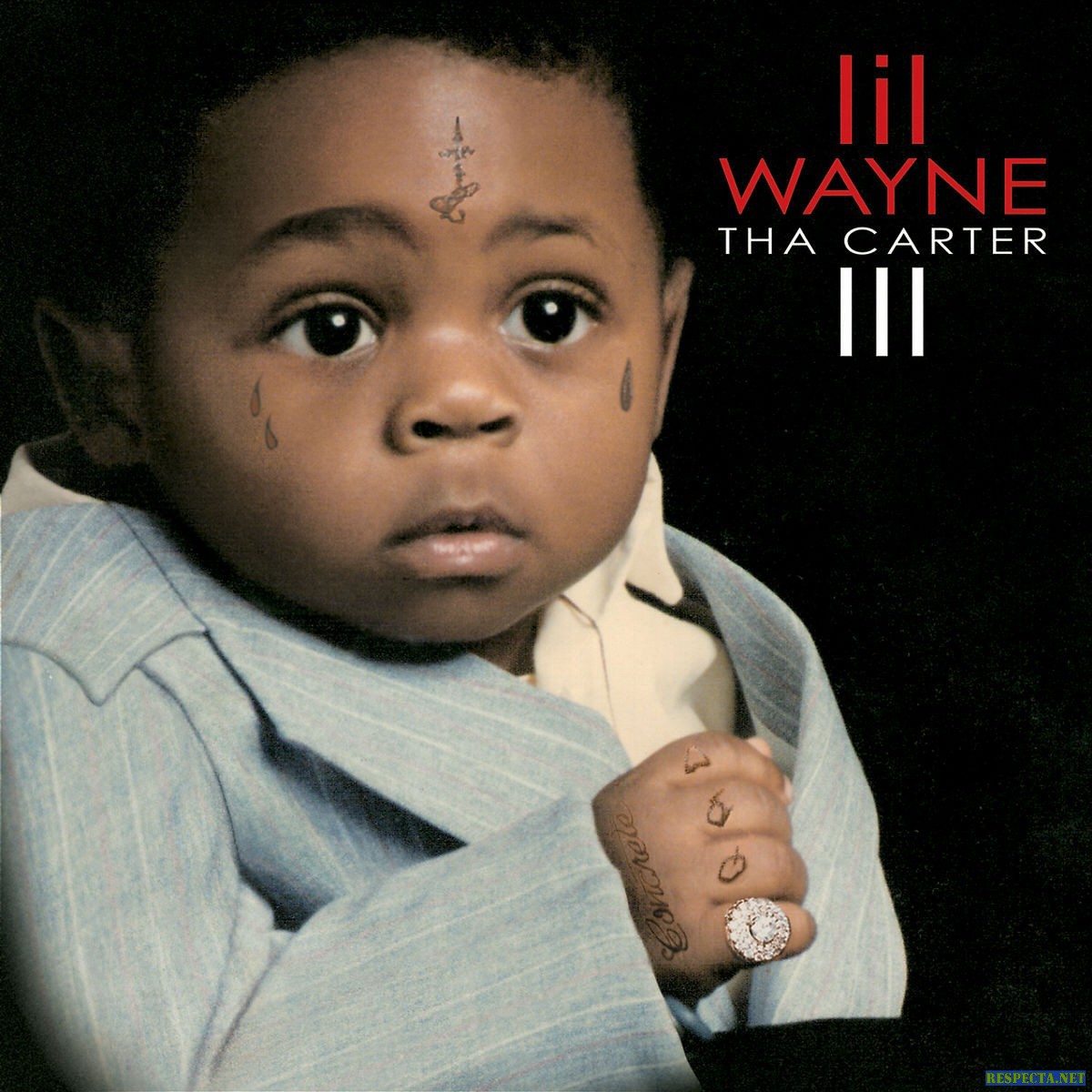
“Welcome back hip-hop I saved your life,” raps Lil Wayne on his polarizing album Tha Carter III. Hip-hop is a genre that has been deemed in need of saving ever since its integration into the mainstream. Plenty of artists have declared the genre dead, plenty have uttered words of resuscitation and plenty are its self-proclaimed saviors. The quote cited at the top is from one of these such artists, Lil Wayne. Here is an artist who has been in the game since he was roughly nine or ten years old and since become one of the most recognizable – for better or worse, names in the music industry.
The source of recognition is, of course, his music. But the interpretation of his recognition is far from universally agreed upon. No matter where you are in the world, whether online or in public, there are equally as many people holding Wayne’s pedestal to the heavens and proclaiming him king, as there are refuting his legitimacy even as a musical artist and classifying him as trash. Though not everything he has created is worth writing home about, it very likely isn’t trash. The defining moment in Wayne’s career came in 2008 with the release of his sixth studio album, Tha Carter 3.












 The Early Registration