Category Archives: Throwback Thursday

Throwback Thursday Review: Purple Haze | Cam’ron

BY EVAN VOGEL
BY EVAN VOGEL

The Diplomats. A collection of Harlem-based rappers, connected by their ability to define a new era of location-based music. For a while in the 2000’s, this collective set a new standard for what east-coasters should be bumpin’ in their whips, cribs and clubs. Heavily sampled and extremely energized beats combined with brash, comedic and clever wordplay were the criteria. The sound is a very familiar one, in the sense that almost every song involves the use of a Casio, other electronic elements and a some sort of looping vocal or sample. Perhaps the most successful of the Dipset trio was Cam’ron. His career has been hidden beneath a cult-level of fame. He was never as well known as the people he collaborated with but has gets no shortage of love from the music listeners who consider themselves connoisseurs of the strange.

The music isn’t particularly strange in itself, but Cam, Cam is a different breed of entrepreneur and musician. He was known for awhile by his fashion sense which usually included pieces of solid pink and purple clothing and even an all-pink Range Rover. During the more recent Ebola scare, Cam took the path of the hero and created something no one knew they wanted, her created a custom Cam’ron Ebola mask…or maybe no one actually wanted it, I forget. Terrible or terribly clever ideas aside, Cam’s 2004 album, Purple Haze was the epitome of the one-of-a-kind music that Cam and his crew could create.

The album was a Diplomat fan’s wet dream. A light-hearted gangster story, filled with interesting musical choices that by some miracle almost always seemed to work. The ideas and concepts at times seem like they were laughed about in the heat of a late night smoke session. From chipmunk vocal choruses to a rudimentary twist on the classic “girls just wanna have fun” excuse for a line; no idea was too outlandish. The approach fully captures the direction hip-hop was taking at this time. It was getting comfortable with the likes of Ludacris-esque rap infused with comedy and more experimentation than a college dorm hall. And if we can think back to those times, I think we would all go back in a solid agreement that they were a hell of a lot of fun. That is the sense of nostalgia you get from this album, it just sounds like the early to mid 2000’s and it’s something that you keep thinking back to, even if there are moments you would rather forget.

A Sherlock Holmes reference in ‘More Reasons’ perfectly illustrates the neo-gangster movement Cam was starting. The intricacies of his thesaurus-perusing bars are held much higher on his ladder of importance than telling a connected story. It was a lot lighter and more relatable to suburban youth than the depictions of constant gunfights and gang wars. Gangster rap was transforming and moving into a new class. The project is almost completely devoid of any seriousness and is loosely connected by strange pseudo-conversational skits. Most of the songs also come across as an attempt to be Diplo-anthems. Big sound, high pitches and a brisk pace. I think 2003 – 2006 was the biggest transitional period for hip-hop and this album is rightly in the middle of this renaissance of sorts. It was adopting new technologies for beat-constructing almost every other week and producers were producing buffets of sound for artists to sift through and pick from. The outcome was a bunch of albums that today we can look at and call classic based on the success of a majority of single-use songs. The problem, evident in this project, is the lack of cohesion. The album is hardly anything you would want to listen through in its entirety unless it is serving as background music to another activity. The classic status can be justified through its ability to stay modern and fun while defining a niche in the genre.

8.8

Throwback Thursday Review: So Far Gone | Drake

So Far Gone
BY EVAN VOGEL

It is crazy to think that only five or six years ago, the highest paid and most popular hip-hop artists at the moment hadn’t even released their first LP’s yet, but instead were releasing strings of mixtapes for free. Since then, these same people have come into millions of dollars and fans through the continued support of their wide album releases. J. Cole did it, Nicki Minaj did it, Logic did it, Big Sean did it, and Drake did it.The reason they were able to maintain and grow a following of dedicated listeners was because of the high quality and consistency of the music they made. If you look in the headlines now, you will see some potentially true and undeniably sad claims about Drake. Apparently, he has been using a ghostwriter (someone paid to write an artist’s songs for them) to write the songs he records, performs and releases.

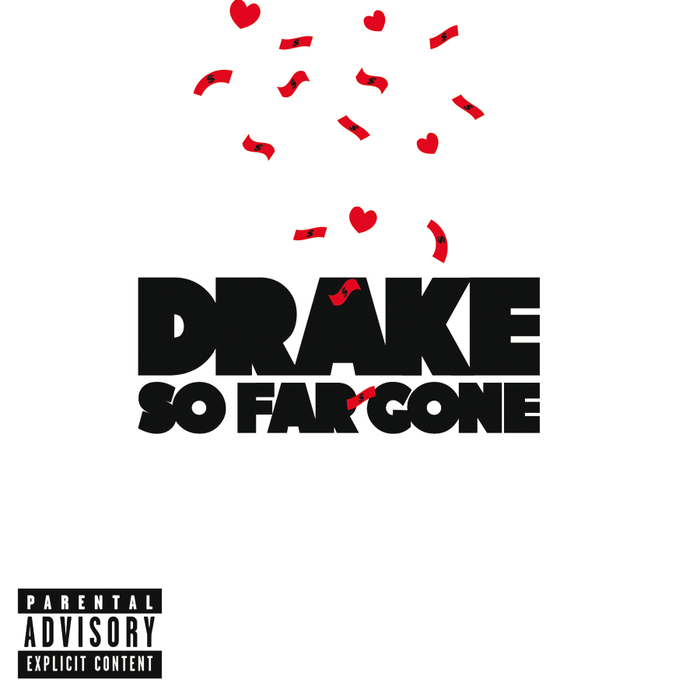
The fact that one of the catchiest hook-makers and overall most enjoyable artists may be only creating a fraction of his music is incredibly disheartening. As I mentioned earlier, Drake wasn’t always as successful as he now is. As a matter of fact he used to rap about his strong desire to achieve success in the rap game. In early 2009, he released a mixtape called, So Far Gone to major acclaim. It was then turned into a remastered and altered seven song EP by the same name later that year. Being that this was Drake’s first foray into this area of the industry he likely didn’t have a ghost writer yet and his music was completely authentic. It definitely sounded like it.

From the very beginning we are greeted with a crooning singing voice from Drake and he is addressing a situation that involves a woman he loves and can’t be with. In-house producer 40 comes through with a soothing synthed-out beat with drums that sound like they are exiting a long drowning tunnel. By the time the four minute and fifty second mark hits we are well aware of Drake’s ability both vocally and with a pen (assuming it was him). Next, snappy snares provide the rhythm Drake needs to explain his shot at success and why he deserves it. Trey Songz on the chorus and a verse from Lil Wayne fail to dwarf Drake which is impressive considering the level he was at, at the time. It is a great juxtaposition of where he is at now compared to then is perfectly conveyed in this song when Drake describes life on a tour bus. From tour bus to what I imagine is now an excessively large private jet, Drake has definitely achieved that goal.

The third song is no doubt, the biggest, most important songs on the album and possibly of Drake’s career. ‘Best I Ever Had’ is the epitome of a radio smash: catchy-hook, simple yet memorable beat and a grocery list of quotable lines. It was great, plain and simple. From there, ‘Uptown’ gives Drake some time to show us his braggadocio skills. The instrumental just drips with class, naturally, as it samples Billy Joel. Drake lays down a chorus that rivals and potentially overtakes ‘Best I Ever Had’ in terms of its catchiness and effectiveness. There should have been a one-second track called ‘Sigh’ inserted between ‘Uptown’ and ‘I’m Goin In’. It is a sad transition from a very original song in terms of production to a song that sounds like it was manufactured by dozens of people specifically for the radio/club. It has Lil Wayne, Drake and even Young Jeezy dropping some potent punch lines which are the only things that allow this song to retain some of its surrounding material’s value but overall could have been replaced by a far better song from Drake’s musical catalog.

The last two songs, ‘The Calm’ and ‘Fear’ are most foreshadowing of Drake’s musical direction for the next few years. Very introspective and personal, Drake even cuts the rap on ‘The Calm’ and has a short rhetorical conversation with the listener about forgiveness. He ad-libs in “Damn” a couple times after a few of his deeper bars which only reflect how literal Drake is being. His music on this EP is noticeable electronic, but that is just his style, and a good one at that. On the last track ‘Fear’ he raps completely free of electronic voice-alteration and points it out trying to put himself at an open and vulnerable place. The chorus is a vocalization of his fears and the verses fortify his insecurities. Track-to-track, concepts jump around, but they eventually culminate to a few songs that sit comfortably next to one another and show Drake for who is is, rather than who is trying to be. All of the music sounds great on one level or another, but the instances where it all comes together show clearly why the mixtape is one of the most successful in the history of the internet and warranted a far too short but more refined EP.

8.6

Throwback Thursday Review: St. Elsewhere | Gnarles Barkley

BY EVAN VOGEL
BY EVAN VOGEL

Sometimes you hear music and have an incredibly difficult time piecing together what era it was created in and for. Kanye West did it with 808’s and Heartbreak. Outkast has always done it. And recently, more and more artists like Frank Ocean and The Weeknd are doing the same thing and creating comfortable music that doesn’t sit well under any current genre-title or heading. Somewhere in the middle of all of this lies an artist; well, a fictionally conjured artist that spawned from two musicians whose styles can best be described as frantic, experimental and wandering. This duo is none other than Gnarles Barkley, or individually known as Cee-lo Green and Danger Mouse.

Cee-Lo’s vocals are packed with enough soul to commander an entire legion of gospel choirs and at the same time can sound horrifying enough to make a song that explores necrophilia sound legitimate. Then, we are left to wonder what sort of musical undertones and production these vocals would sound at home over. Surprisingly enough, the answer is: damn near anything. Cee-Lo’s vocals are astounding, but the soundscape that Danger Mouse created for their first foray into full-length LP creation is what pushed this album to a place of intriguing funk-hop that had its debut on their album St. Elsewhere.

The title itself is one of grandeur when considering the exclusive sound of the music. It sounds as fictional and whimsical as its creators’ combined musical persona. The album opens with the familiar sound of a film reel spinning into the opening sequence of a movie followed by one of the most infectious clap, drum and trumpet combinations I’ve ever heard. As if the song, which is called, ‘Go-Go Gadget Gospel’ didn’t already sound unrestrained enough, it has Cee-Lo belting, “I’m Free” on the chorus and it is as, if not more wonderful than you can possibly imagine.

Potentially the biggest or at least most important single of 2006, ‘Crazy’, shot the duo into the skylights of superstardom. Not only did it top charts across the globe, what is even more crazy is the fact that the number one song on the charts was actually good, very good. I’m not trying to say that every number one song is trash but typically, they all follow the same script and generally sound like they were trying to be right where they are. The entire album of St. Elsewhere sounds like it was created out of a huge spark of creativity and its makers never intended to strike chart-topping gold.

Topics covered span from happy to depressing by way of love lost, seeing a monster within yourself and manic schizophrenia. The rapid transition of themes help to maintain the allure of playfulness that is present across the project. Danger Mouse is making it obvious that he is a man who knows his way around samples as well as every moving piece on his beat-making equipment. He changes pitches like they are moods and adds in elements just as quick as he takes them away. The song ‘Transformer’, while it sounds nice, sadly takes away some from the album’s aesthetic because Cee-Lo points out his own versatility and how he can bend his sound to fit into any crevice of sound that is laid before him. Some things are better left unsaid, especially when it is obvious to the listener after hearing the versatility from song to song.

Funky, soulful, futuristic yet reminiscent of bygone eras, this album plays all the right notes at all the right times and ends up being incredibly fun and thought-provoking. Even when sounding more poetic and less energetic, Cee-Lo keeps his engagement to the listener as do Danger Mouse’s beats. Its concepts are both grand and small in scale unlike its epic beats, which consistently sound unique. The Grammy this album received is incredibly well deserved and ironic. It is ironic in the sense that it won for “Best Alternative Music Album” and the term “alternative” seems so cliche for a project that doesn’t fit into any previously specified genre. It is so much more than can be explained by a single term that fits like a high school gym-class pinnie. The last time the world heard from the collective, Gnarles Barkley was back in 2008 and it was another great project that seemed like it was still a signal from a duo that had so much more to give. Then, Cee-Lo made a statement back in 2013 that there would be more music on the way…here’s to hoping they fulfill that promise and that we don’t have to resort to “what if” conversation in the years to come.

9.5

Throwback Thursday Review: Fight With Tools | Flobots

BY EVAN VOGEL
BY EVAN VOGEL

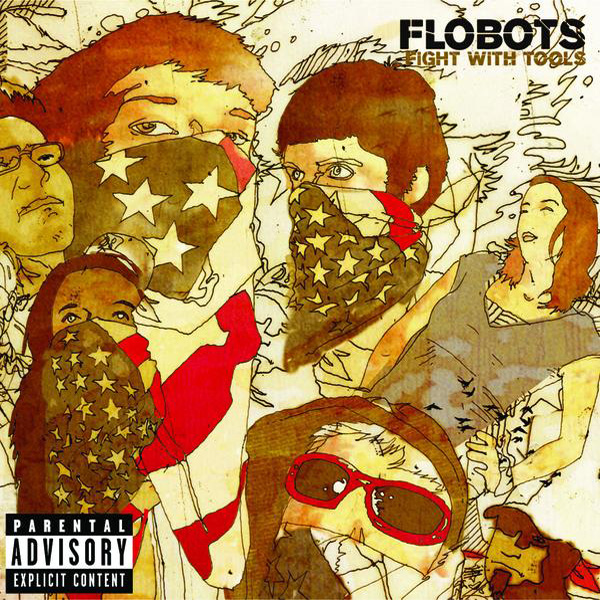
Usually when you think of Hip-hop, you aren’t picturing live instrumentation, trumpets, violas, cellos, back-up vocals or a group of people who resemble the Flobots. Appearances definitely don’t constitute what makes up the whole story, not even the half of it. With the Flobots’ first studio album, Fight With Tools, the group release a socio-political machine of a project that took a stance against social and governmental norms in an attempt to change the way we perceive everything that is going on around us. Their attempt ended up being one of the most powerful musical representations of the times and their ideas are so much larger than the sum of the songs.I am a huge proponent of musical education and this album stands among the elite in that sense. It has the ability to educate an entire populous on a different way of looking at our systems, one classroom at a time. The album opens with a beautiful yet simplistic viola and drum, over which the vocals are picking apart the big business, corporate, advertising and other media variants. It is completely footed in spoken word poetry and contains all of the heart and drive without the rhythm. The next track has an incredible viola again accompanied by a melodic guitar riff and discusses the Mayday riots that take place in the U.S. every year.

They set the tone from the very beginning that they are taking a stance and that stance is often against American culture and ideals. The song ‘Same Thing’ has the best rhythm and flow on the album up to this point. It is also their most straightforward attack on government greed and points out their adeptness at doing things regardless of what the American people want. It’s an upbeat track that is just incredibly easy to get behind. Sticking largely to their formula of drums, bass kicks and heavy viola strings, the next song ‘Stand Up’, creates some of the vivid imagery that will stick in your mind long after the sound drowns out from within your speakers. You as the listener are asked to picture people in much worse situations than yourself and then asks you to contribute to make these problems better, rather than just idly complaining about them.

The instrumentals the Flobots create to lay their unflinching lyrical thoughts over are equally as impactful as the words themselves. I personally feel that creating their beats organically from a band allows for a much more passionate sound. Guitars strum harder, drums kick snappier and the viola is played with such intent that is feels like a weapon aimed the government by the end of the album. The combination of a having a rock-band/orchestral-like group build and poetic lyricism is just as intriguing to the ears as it looks on paper. The Flobots have blended genres under the guise of hip-hop to the point of creating their own and it has brought forward the ears of people who otherwise have written-off hip-hop altogether.

Props must be given to the Flobots for getting as much attention with their song ‘Handlebars’ as they did. An album that’s premise is essentially the takeover of a radio station to broadcast a message all over the world — and that is exactly what they did, basically. The song simple rhyme scheme and catchiness are hiding a message that you really can’t find anywhere else on the radio. The first verse can be looked at as a rapper talking about all of these trivial tasks and life experiences he is content with. It is dichotomized by the second verses look at a politician whose greed and constant need to do and receive more eventually drive him to a point of dangerous ambition and power hunger. Years later, Kanye agreed that no one man should have that much power to himself.

Fight With Tools has a revolving theme, much like the real-world counterpart of politics. Once you start to think things are changing, whether the beats or subject matter they soon revert back closely to what they resembled before, just like politics. I don’t know if this mirrored effect was intentional by the group but it both lent to and detracted from the experience. Eventually you want to say they are beating a dead-horse by constantly challenging the system and government but they manage to keep it fresh enough to warrant your attention for just long enough. The project is made well enough to challenge the thinking of people in any age group or demographic. If it changed the way my 14-year old, politically oblivious self looked at the world, there’s no telling the profound effect it has had and will continue to have on other people. It totally helps that it sounds so damn good too.

9.0

Throwback Thursday Review: The Red Light District | Ludacris

Ludacris
BY EVAN VOGEL

There’s no doubt about it. Hip-hop music has changed in major ways of the last few decades; as any art form should evolve. The mythicized “Golden Era” is dependent on when you grew up and who introduced you to the genre. No matter what genre of music you listen to, we all have that one or maybe two or three artists we grew up on and they embody the music in our hearts, no matter how far they have since strayed from the sound. Like many of you, one of these artists I grew up listening to was the guy from 2 Fast 2 Furious with the ridiculous afro, Christopher Bridges AKA: Ludacris. And I’m sure, much like myself, many of you can recall his 2004 release, The Red Light District, being one of the first CD’s in your hip-hop collection.

Luda has always been able to combine beats heavily influenced by Atlanta sound with his very loose, comedic lyrical style, and do it with a rhythm he has made all his own. The Red Light District is not Luda’s first outing as far as LP’s go and this is definitely apparent. It is clear he has used his prior outings to grow upon himself, yet retain the style that gained him his popularity. Starting off on a high note is definitely a correct way to describe this album. The intro is ripe with punch-lines and braggadocious lines but it is all done so earnestly. He says what he means and means what he says. Whether talking about how much money he has or how skilled he is at his profession, nothing sounds fake or over-the-top boastful. Without having to directly say how hard he’s worked over and over again, you can hear it in the way he raps.

From the introduction, we are segwayed immediately into an energetic instrumental accompanied by some of the project’s most entertaining similes and metaphors. Plenty of nods to the Austin Powers ‘Goldmember’ film, there is a wittiness and silliness that few can command like Ludacris.The hook is delivered in a very catchy-manner, Luda asks himself, “Whatchu doin’ man?” and then replies, “I’m comin’ for that number one spot”. Keeping the energy high but switching from fun to aggressive, we all ‘Get Back’. Perhaps the album’s most widely known cut, it is bass-heavy with distant claps and high-pitched horns. The song is more memorable and repeatable than just about anything released up until that point.

The album is weakest when Luda strays from his humor and favors a meaner, harsher delivery on songs like, ‘Put Your Money’ with DMX or ‘Pass Out’.The songs aren’t terrible by any means, they just don’t fit the Ludacris mold as well as his lighter more fun work. He is fun to listen to and he knows it. Often times ending the last syllable of each bar with a high pitched screech or elongating his words to add a little more of that ridiculous energy kept up through most of the album. Ludacris’ persona is what sets him apart from other artists, everything about his music on this album sounds exclusive to him.

Even the way he talks about having a lot of money on ‘Large Amounts’ is funny, engaging, clever and incredibly fresh. He admits to talking about all of his money in his music, but mocks himself by saying that it only leads to family and friends trying to “stalk” him or show up at his house and ask for some financial help. He even discusses the splurging lifestyle of rappers who blow all their cash on cars and jewelry, only to later school you on assets and liabilities. The man is smart far beyond what his style would lead you to believe. This fact is especially apparent when thing get real on ‘Hopeless’. He is completely aware of government corruption and the way poverty seems to be targeted at African Americans. All of the real moments are still sprinkled with Luda’s entertaining delivery style and very particular energy. The energy level rarely falls below a ten.

Even the stoner-anthem ‘Blueberry Yum Yum’ is more eclectic than almost any other song about weed. His lyrical delivery is almost smoky in its weight and impact which only further proves Luda’s ability. The album is closed on an even higher note than it begins. The track ‘Virgo’ with Nas and Doug E. Fresh, is raw in every sense of the word. It was the most hip-hop song of 2004 and still stands near the top today. Doug Fresh’s vocal beatbox is premium and both Nas And Luda serve up some of the freshest rhymes on the entire project. It is the perfect way to end such a, entertaining high energy album, with three of the greats doing exactly what they love to do and having fun with it at such a high level of skill. This album portrays the Ludacris that will live on in my memory forever — and I wouldn’t have it any other way.

9.3

Throwback Thursday Review: Killer | Tech N9ne

BY EVAN VOGEL
BY EVAN VOGEL

Some artists have been in the industry for so long that no one is really positive when they started making music. Sadly, many of the artists that this statement applies to are underground and overlooked. Kansas City rap artist, Tech N9ne is has released over 15 albums and EP’s since 1999 yet too much of the populace is unaware of his existence. His style can’t be defined, his flow is unmatched and his energy is infectious. The man derived his stage name from a semi-automatic gun because of his ridiculous speed-rapping ability — and the hype is real. Being that he has released so many diverse projects, it is hard to single out a single as his best. A good place to start is his lengthiest, for several reasons.

His eighth album, Killer, was released in 2008 as a double-disc and has an exhausting 32-tracks included. These songs were all created well enough into Tech’s career that he had experimented with plenty of styles, subject matter so it was a test to see if he could combine his knowledge and technique into a formula that would equate to 32-tracks of entertainment. The stars must’ve collaborated with Tech and aligned because the final product is undeniably consistent.

Somehow, Tech has taken nearly every genre of music and found a way to fuse them together in such a way that his rapping only makes them sound better. He layers his voice over hypnotic synths, rock guitar riffs, poppy drums, straining bass hits, hums, middle-eastern wind instruments, finger snaps, lunch-table style knocking, slow piano keystrokes and plenty more. His flow never sounds unnatural and yet it never ever sounds the same. It is as though Tech made the beats post-rhyme. The mastery he has over his wording and annunciation can be compared to the mastery Hendrix had over his guitar, true artistry.

Tech flows just as easily through his subject matter. Unfortunately, swinging from songs about the state of hip-hop in society, to a party banger, to his sexual fantasies doesn’t provide much cohesion. Tech never has been and likely never will be an artist you listen to for a book-like story line from album start to close. This works to his advantage as well as his disadvantage. You never know what journey he plans on taking you on from minute to minute, it is tense and satisfying to be able to enjoy such a mixture of content put under the same title. With this satisfaction also comes inevitable exhaustion. Though it may have been his intention, Tech never lets you get comfortable with his flow or his topic before he decides it is time to try something new again.

This album proves to be an entrance ticket into Tech’s mind and his thoughts move just as quickly if not more so than his mouth. While his flow and lyrics are premium quality almost 100% of the time, his choruses tend to falter from song to song. He tries his hand at singing, passes the torch to many other artists and even attempts duets. One example is song, ‘Enjoy’ on the second half of the album. Tech infuses his voice with heavy-robotic effects that come off incredibly strong after a verse that sounds like Tech was rapping to microphone placed in the bottom of a well. The contrast doesn’t sound particularly pleasing and comes off sounding like a forced artistic endeavor.

Tech should be applauded regardless of these few instances where things don’t work as well as he might have originally envisioned. It would be a disservice to call the album mediocre when it is actually more entertaining and interesting than most albums released at a third of its length. Tech wasn’t trying to prove anything at this point, other maybe than the fact that he can still rap creatively after eight full length albums. He wasn’t trying to charge people for 32 tracks on an album, he simply wanted to give fans what he pours his heart and soul into each day. He definitely doesn’t stick to a script and tries things conceptually that many other artists would probably laugh at even the idea of. This album is the perfect example of what Tech N9ne is capable of and it sits side by side with the music Tech is releasing still today, seven years later.

8.2

Throwback Thursday Review: Born Sinner | J. Cole

Unknown
BY EVAN VOGEL

The sounds of a church choir quickly followed by snapping snares and a heavy-nod at the Notorious B.I.G. Two years-ago today, this is what introduced people to J. Cole’s sophomore album, Born Sinner. This album would go on to be really the first time that Cole would discuss his handling of the level of fame he has attained. In that sense, this album is a lot like Drake’s second project, Thank Me Later. Similar in the sense of reflection and realization that this life of fame isn’t always bright. The ‘mo’ money, mo’ problems’ argument has been beaten to death by this point but J. Cole wants to give it a few more whacks for good measure.

The first song does what it should. It sets the darker tone for the ensuing tracklist and establishes the characters, the struggle and the direction. Cole uses the album to put himself in plenty of different positions of fame. Whether he is imagining what it would be like to succumb to the money and power or driving his points home with his own real-life scenarios, he is strongly representing the dichotomy of his lifestyle.

This album is also the exhibit for his production. Finishing up the basketball theme attached to his last few mixtapes and first LP (The Warm-Up, The Come-up, Friday Night Lights, and The Sideline Story), Born Sinner is a bold new direction for his sound. Full choirs, quick drums, simple synth rhythms and light piano keys represent a more mature and sophisticated Cole. The beats are much simpler and more easily listened to than your typical radio fare. It is clear that Cole’s focus is still what he is saying and he gives listeners a bevy of sounds to hear him talk over.

Cole is a top-tier wordsmith and this album is his best work in that department to date. Lyrically, there are times where his self-checking and reflection are worded in such a way that something so common, sounds exclusive to Cole. Take buying a chain for example. On ‘Chaining Day’, Cole raps about spending money foolishly to give off that perception of a lavish lifestyle. His first two bars are stated so meticulously that you can hear the comedic regret in his voice. “Look at me, pathetic n*gga, this chain that I bought, You mix greed, pain and fame, this is heinous result.” Later on, on ‘Rich N*iggaz’ Cole addresses this topic of senseless spending and how money ruins more than just your sense of appreciation again. This time, he does it in a much more serious manner. His tone is much more relaxed and the beat is laden with the sound of whiney-chimes. His insight into the future of this lifestyle is greatly paired with his own acknowledgment of how extreme he is making it all sound; but he is worried nonetheless.

His songs all work, to a point. His preaching and insight don’t have the impact of his less serious songs because of his crafty lyricism. The songs that hit the hardest are the ones like, ‘Let Nas Down’. Sincere and not worried about how he is expressing his emotion through wordiness you get a much stronger sense of self from Cole. He is teaching humility with this song and teaches everything from being humble to respectful on much of the album. Some of his other songs can sound like he is trying too hard to impress you while simultaneously trying to get his point across, which works, but only to a point. That being said,  Cole makes sure to never waste a bar. Each line cohesively works with the next, even if they occasionally lean misogynistic or are playful metaphors, which every artist is entitled to.

There is no discrediting Cole’s ability as either a lyricist or a producer based on this album. It isn’t perfect, but it is progress — and a lot of it. He is passionate about his craft and has an understanding that many artists don’t. People listen to and are affected by the music he makes. This drives him to always be saying something, even when there is very little to be said on a particular subject, Cole will say what he wants to say and more. It is a trait to be admired in a musician today and though we may all be born sinners, Cole’s music will likely help to create some conversation and allow some people to learn from the lessons life taught him. Cole knows that being famous isn’t everything and he emphasizes in fact, that it is nothing if you lose everything else along the way. That is impossible not to respect.

9.0

Throwback Thursday Review: Thank Me Later | Drake

Thank Me Now
BY EVAN VOGEL

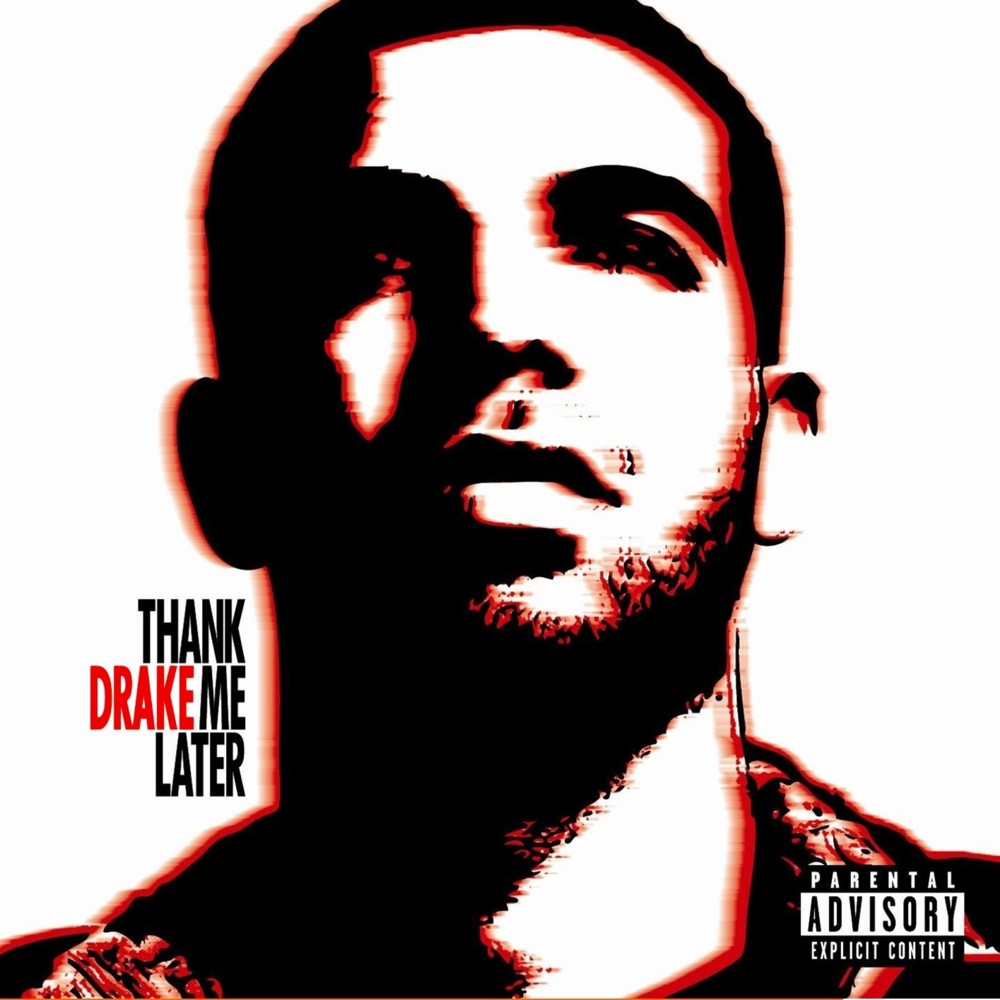
Unfortunately, Hip-hop has always been known by many for the way artists talk about women, money and drugs. In all fairness, much of the genre is littered with misogynistic tendencies and a ridiculous urge to indulge in the finer things in life, however shamelessly. Now, while I’m not one to tell people how to spend their money, I would much rather hear about what comes with that fame. I think most would agree with me saying that stories about an artist’s rise to fame and their struggle with everything it includes like the alienation of past friends, relationship quarrels, or a fear of what the future could hold, are much more listenable than a grocery list of things that an artist spent their paycheck on. Maybe I’m in the minority, but listening to Drake’s introspection and the relational struggles of fame on his official debut album Thank Me Later, is incredibly worthwhile.

While the album naturally has its moments of selfish lyrical dribble, the 6 God’s main topic of conversation is reflection. Now that I brought reflection up, I have to get this out of the way — this album reflects more than Kanye West does in the mirror each morning. This isn’t necessarily a bad thing. His reflection and heartfelt regrets come off as honest and you really do get the picture of a person who hasn’t come to grips with the new reality he lives. It has all of the required ingredients to creating and telling the story of a man who has reached a point of success he never even thought existed and trying to live up the expectations people naturally are going to place on him. His comfortability in this new lifestyle is definitely not assured. Drake’s new status has him looking twice at the people around him before calling them friends and his relationships with women seem to be doomed.

Right from the opening track “Fireworks”, he is putting everything out there on the track. Touching on relationships, his money, family, divorce, death, the search for himself and even more. The hook, carried by Alicia Keys provides a sombering but uplifting melody to keep the mood right. The second track, which is likely my favorite on the whole project, is “Karaoke”. It depicts a relationship that dimmed and withered away beneath the bright spotlights of fame. This is where Drake is different from most rappers. He completely comes across as heartbroken and vulnerable. This emotional presentation of self has become much more apparent and accepted today, but before 2010, most rappers and listeners would look at Drake as a soft crybaby (made apparent by endless Drake memes).

Drake is adjusting, not only to the new life he has found himself in the possession of, but he is also adjusting hip-hop in general. Drake’s style is his own. His delivery isn’t particularly hard-hitting but rather, soft and enveloping. The beats are less of a selection and more of a carefully crafted and laid out palette of offerings. Containing airy synths, light piano chords and some snappy drums, Drake’s voice is able to slide in between it all as if it is simply another key on the board. There times where Drake makes sure people know he can rap with the rest of the A-List. Songs like: “Over”, “Thank Me Now”, “Miss Me”  and “Up All Night” showcase this ability and show Drake in a much snappier and more wide-awake light.

By the end of the project, Drake has likely connected with the people that the rest of the hip-hop greats don’t target. The people who have lived an average life, in safe neighborhoods with friends, girlfriends and a house. You realize that the things that Drake is going through aren’t THAT terrible. After all, he is dealing with the consequences of having a lot of money and a lot of fame. It is eye-opening to hear how that life has altered his perception of life and how damaging it has been to relationships along the way. At this point, Drake wasn’t sure if he should be thankful for the fame or if he should despise how it changed his life so quickly. Me personally, I was thankful for the album that sprouted from this mental struggle when it came out five short years ago — and I will also thank you now sir.

8.8

Throwback Thursday Review: The Rising Tied | Fort Minor

Fort Minor Album Cover
BY EVAN VOGEL

Making a statement is a common goal for many artists. It has to be. With so many different people vying for their credibility in such a polarizing medium, there has to be a way for you to stand out and apart from the exponentially increasing herd. Songwriter/rapper/producer Mike Shinoda is no stranger to the need of proving himself; in fact, for him, it has been ever-present throughout his career. Even though his name may not be readily identifiable by you, you likely know him as one of the frontmen for rock group, Linkin Park.

Shinoda is the technical engineering guy when it comes to Linkin Park’s music, as well as – to put it simply – the guy who raps. No one thinks of Linkin Park as a rap group, yet this is where Shinoda found his niche, as a rapper. When the group formed, the label executives even considered confining Shinoda to the keyboards and production, saying the band didn’t need the added hip-hop element. So started this need to prove himself as a necessary element to Linkin Park’s sound and I don’t think anyone can say the group would be anywhere near as successful if their formula had changed.

Eventually, this proving of himself as a useful co-vocalist to one of this generation’s most successful bands led to the awareness of himself as a more than competent rap artist. This awareness manifested itself as a solo hip-hop LP from Shinoda that would prove to be better than many of the genre’s other offerings and dismantle any talk disputing his musical abilities across the spectrum. Wanting to put all of the public’s attention on the music, he refrained from using his own name and came up with the alias of ‘Fort Minor’ for the album entitled The Rising Tied.

Shinoda’s hands are all over this project, literally. He played every instrument himself, did all of the production and engineering as well as the songwriting and rapping. From the get-go it is apparent that this album was going to be hard-hitting, raw and rooted in hip-hop culture. There is an audible sense comfort in Shinoda’s low-toned, angsty vocals that fit perfectly with the tone of the album. Shinoda is in no way, shape or form trying to amaze you with complex lyricism or expertly dynamic delivery, and that is perfectly okay. The lyrical content is typically not as deep, brooding or dramatic as it wants to be, but it does get every point and image across perfectly clearly. In its brightest moments, it is a testament to what hip-hop culture truly is. The storytelling that Shinoda implements on songs like “Kenji”, which is about his family’s’ struggles during World War II or “Red To Black”, where you can visualize the life of one of his closest friends unravel before you, is really where you feel most empathetic towards him.

Songs like “Feel Like Home” and “Cigarettes”, while great songs, are difficult to get as invested in when the lyrics seem to be looking for sympathy,

“I’m not trying to bum anyone out,

Not trying to be dramatic, just thinking out loud,

I’m just trying to make sense in my mind,

some defence from the cold I’m feeling outside.”

All in all, the lyrics serve their purpose as way for Shinoda to finally get all of his feelings out into a diary of sorts. He speaks on the music industry, people’s opinions of him and how he doesn’t give a single shit what anyone thinks. You can tell how liberating it is for him to finally be able to get this all off his chest. Some of that feeling is lost in translation on its way from him to you as he describes how bad social conditions are in certain areas of the country and he just “takes it all in”. Luckily the analogies and depictions in the lyrics are all relatable on most levels and attached to wonderful production so it is easy to overlook these shortcomings.

The beats traverse a plethora of sonic space. From classic boom bap to synthesized scratches and keys and live instrument appearances from violins and guitars. To address the hard, gritty hip-hop bass present throughout the album, it is simplest to say that every song on this album was created to be blessed by every audio-junkie’s elaborate car stereo system. The bass knocks like a high-speed bus collision and the turntable scratches are crisp which all get laid over light piano arrangements or chaotic synth.

Another consistent element on the project are guest features. From Common to Skylar Grey and John Legend to Styles Of Beyond It’s as if Shinoda wanted the added firepower on the project to keep it fresh. The issue is not with the guest spots being plausible and of a high-caliber, it is an issue of necessity. Many of the songs would have been fine, if not better without the features. The album is filled with more passion and direction than probably 90% of the albums released today. Though it does have its missteps, it fulfills its purpose in showing Shinoda’s legitimacy as a solo hip-hop artist and producer. The sound is unique enough to maintain relevancy ten years later and it all begs a simple, yet eager question. Will we hear another Fort Minor album in our lifetime? I sure as hell hope so.

8.0

Throwback Thursday Review: Love Hate | The-Dream

Love Hate
BY EVAN VOGEL 

Greek mathematician, Pythagoras, developed the equation to figuring out the missing length to one side of any right triangle and it is now used everywhere. Even though there are no similar proofs, I think that R&B artist, The-Dream, has crafted some sort of exacting equation to creating catchy songs through a melding of choruses, melodies and sexual innuendos. Typically, if an artist sets out to create an album that consists entirely of attempts at singles…things don’t go so well. But, by some miracle (or equation), with The-Dream’s debut album, Love Hate, he took a shot at putting his project in the aforementioned situation and struck gold, literally.

Continue reading Throwback Thursday Review: Love Hate | The-Dream