All posts by Evan Vogel

My name is Evan Vogel. I'm a 22 year old College student attending UW-Milwaukee. I am majoring in Journalism but my passion is Hip-Hop. I write my own songs and poems and just genuinely love the art form. Contact me on Facebook, Twitter or my blog if you want to get to know me or just want to find some new music! Peace and Love.

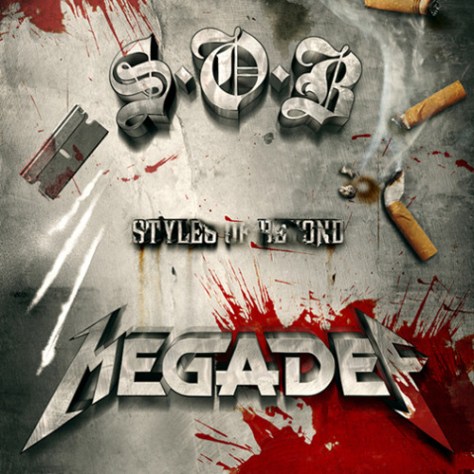
Throwback Thursday Review: Megadef | Styles Of Beyond

Megadef

Styles of Beyond are like those out of control kids in your neighborhood that kick trash cans over, light fireworks at midnight and tag buildings and signs with spray paint just for kicks. Nothing they do is inherently violent because they are actually decent kids but they like to wield a mask of “I don’t give a shit” when they are together. Be honest with yourself, we have all been or wanted to be those kids at one time or another – and Megadef is their soundtrack. Musically, what this sounds like is tight-aimed verbal aggression spit over hectic wrecking ball beats. This is exactly what Styles of Beyond gave listeners with their sophomore album.

Just like the aforementioned random acts of mischief, Cheapshot and Skully, the groups two DJ’s, cooked up a bevy of hectic, brutal, rock-riddled instrumentals for Ryu and Tak, the MC’s, to machine gun spray with words of caution. Though their lyrical attributions aren’t particularly diverse, they are ripe with energy and linguistic technicalities. Syllables align word to word and bar to bar forming and maintaining a steady head-nodding rhythm. They are definitely skilled rhymers. Consistently referencing the speed and level at which they can spit. From self-declared “freaks of nature” to being the definition of sick, humbleness is wrought by narcissism.

Luckily, their claims are hard to dispute. Partly because their claims sit somewhere between metaphorical assault and murder, but mostly because they are backed by some of the most powerful deliveries of any two MC’s ever. The voices are abrasive enough to sit disguised on a shelf next to 26 grit sandpaper which only helps to add weight to the fist that is this album. The biggest hits though, are owed to the overly medicated instrumentals that incorporate everything from, a The Stooges sample from 1969 to a Bob Marley sampled, ‘Mr. Brown’. The latter of the two an incredibly innocent sounding original; then Styles threw some hard percussive hits on it and turned it into a banger with a dash of age-old soul.

The album isn’t revolutionary and the style isn’t from too far beyond, but it’s definitely high quality music that begs to be heard. Anytime this level of aggression is backed by an equal amount of skill and know-how, there’s something worth listening to. Don’t come in looking for a mapped-out history of the centralization of urban violence in L.A., but rather, listen to the passion and creativity that can stem from such an environment, especially in a time not long after or an area far from the L.A. riots of the early 90’s and prepare to get amped up.

8.1

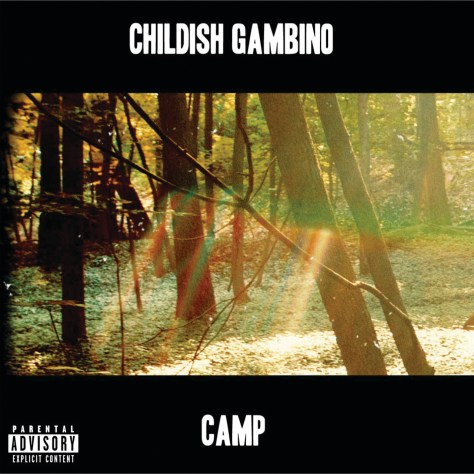
Throwback Thursday Review: Camp | Childish Gambino

Camp
BY EVAN VOGEL

Obtaining credibility in hip-hop is not a task easily done. Fundamentally, it’s an art form that manifested from an extensive history of systemic violence that targeted African Americans. Hip-hop music became the voice of the people in underdeveloped and neglected areas like The Bronx, in New York. The artful expression of anguish. Throughout the late-70’s and 80’s, hip-hop started diversifying its sound and began its stretch into mainstream appeal where it has since remained. When the art form itself took a grand ascension into popularity, with it came a number of imposters. Rappers who talk a life they never lived, tearing at the very roots of hip-hop. “What’s the point of rapping if you can’t be yourself huh? That’s why I come first like my cellphone.” Childish Gambino’s cry of acceptance rings out with all the gusto of a new school rapper who has found identity in his nerdiness via pop-culture reference-rap on debut album Camp.

Rather than be imposter, Gambino plays the role of outsider. Outsider to a genre that he loves and respects yet feels suspect because of his social status, mixed-appearance, nerdish tendencies and the fact that he grew up knowing both of his parents. All outdated concepts, even in 2011 but his statements retain their earnesty because of ‘show, don’t tell’ rap style. Over the chime of a high piano chord and orchestral drums and violins that switch to a distorted synth, Gambino reminisces on stealing Tommy Hilfiger from the 7th grade lost and found, and pointing out racism’s subtlety in society by not feeling black enough for the barber shops he frequented as a teen. His infatuation seems to be with changing the perception of those doubt him as a serious threat in hip-hop.

How does he follow through with that? Well, the man can definitely rap. Rhythmically, he is as advanced as any veteran and it’s extremely noticeable over the largely self-produced instrumentals that often sound grand and complex enough to echo influence of Kanye’s, My Beautiful Dark Twisted Fantasy. His verses are internal conversations with himself and the choruses become declarations of self-awareness sung beautifully by Gambino himself. By now it is fair to identify his effectiveness as at least a triple threat on the album. Serving as producer, rapper and singer work to make the album all the more personal. He is at his best when he leaves behind his dominant wielded metaphors and bares his emotional soul on the track. Tracks like ‘Bonfire’, ‘LES’ and ‘Hold You Down’ show that Gambino has more to offer than wit. He competently reflects on relationships and life in a way that is both critical and heart-grabbing.

In the end, I think Gambino gets lost in the assumption that hip-hop music is as unaccepting of nerdiness as his high school classmates were. In reality, hip-hop artists have a rich history of being classically defined a nerd. From being huge fans of chess like Wu-tang Clan’s GZA or Eminem’s child-like sense of love for comic books. His nerd-status in life becomes a metaphor for how he is looked at in the rap-game but it isn’t incredibly accurate. To the average listener, Gambino never was that nerdy kid in high-school, their first perception of him is that he is a well rounded rapper/singer. Luckily his wittiness and wicked flow carry him through the songs that focus on loose metaphors about his feelings of false-insecurity while the songs focused on things other than his own perception of self show signs of that fuel that made artists like Drake famous.

8.4

Throwback Thursday Review: Rappa Ternt Sanga | T-Pain

rappa-ternt-sanga
BY EVAN VOGEL

T-pain crafted both a dance-floor/bedroom epic with Rappa Ternt Sanga. Chalked full of layered harmonies, acoustic six-strings, rhythmic snaps, claps and just the right amount of bass. T-Pain took his southern coast-style of rap and infused it with intense vocal pitches and alterations, effectively becoming the poster boy for autotuned music. Let’s clear one thing up too, T-Pain has an incredible natural voice. People tend to think that he uses autotune because he can’t sing, but that couldn’t be more incorrect. He is a perfectly competent singer but simply strives for a different sound by utilizing the vocoder. That is actually what makes his music so interesting to listen to, its uniqueness.

Take the tonal changes and other altered elements out and what you have is an R&B album. What autotune did was give him the ability to amplify his voice and turn a typical, soft-spoken verse into an orchestral, room-filling emission. Clean vocal echoes stream over both light electronic and acoustic elements with efficiency and ease. Really, the only purpose the instrumentals need to serve is to give us something to rhythmically nod our heads or move our feet to. In that, they more than fulfill their musical duty. Highlighting T-Pain’s voice as an instrument makes every note, be it instrumental or vocal sound as though they have a cohesive bond to one another. From the sporadic hi-hats of ‘I’m Sprung’ to the revolving flute sounds of ‘I’m In Luv’, few elements mean few distractions.  

The subject matter never strays too far from T-Pain’s adoration of love and women. Clearly easily persuaded by the sight and touch of a beautiful woman, T-Pain succumbs to his sexual vices more often than not. And more often than not, the music’s subject matter and vocal arrangements work as audible advantage, contextualizing it to the bedroom. The moments where he steps out into the world and deals with the stress of bills and even family alienation reveal how much more there is to this sang-rappa.

His music doesn’t need to be particularly deep, honest or telling. Rather than trying to be an open book here, he instead concerns himself with his fantasies. It plays much like a dream. His sweeping vocals layer the musical landscape with enough energy and emotion to keep his narrow lane of subject matter engaging for most of the 71-minute runtime. T-Pain crashed onto the scene with a sound that no other artists possessed at the time. It came as a sort of culture shock to both R&B and Hip-hop because of its unique take on both. It polarized conversations about music for years to come. Is autotune really singing? Yes, yes it is. Far from a perfect album but close to a revolutionary one that would go on to change elements of music production forever. T-Pain will always hold a special undocumented place in Hip-Hop and R&B where there are no rules to abide by and autotune runs rampantly and beautifully free.

8.0

Album Review: Purpose | Justin Bieber

Purpose
BY EVAN VOGEL

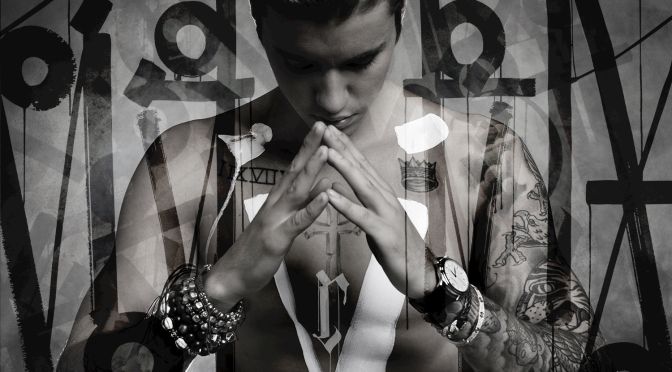
Justin Bieber was thrust into fame at a young age and almost immediately became the poster-boy for YouTube discovered stardom. Clearly, no one taught him how to handle his jet-like propulsion into the spotlight of fame and let’s just say, mistakes were made. As it turned out, mistakes were also accompanied by pretty good music. Mega-hit, ‘Baby’ has long since had over a billion views on YouTube and ironically, the title of that song is not far removed from the descriptions many people have placed on him in the last half-decade. It seemed as though Bugatti Biebz would never escape the sonic purgatory that his music occupied, somewhere between Kidz Bop and early Justin Timberlake. Then he dropped a collection of perception-altering tracks with 2013’s, Journals.

Gone were the days of elementary infatuation songs and playground references. Bieber had started to link up with artists like R. Kelly, Lil Wayne and Future that carried with them more varied fan-bases and definitely helped open Bieber’s mind to creating more conceptual music. After a nearly two-year hiatus, while Bieber’s newest project, Purpose, isn’t necessarily a bursting through into adult-R&B conversations, it’s definitely another foot through the wall. Almost making his past musical endeavors a distant afterthought, this project focuses on repentance, change and love in a surprising and coherently adult way.

Much of this new direction is no doubt a symptom of collaboration efforts with Skrillex, Diplo and PooBear. Purpose, is an album that sonically seems concerned with weaving Bieber’s light R&B vocals between emotionally synthesized electronic dance music. It typically works too, although I don’t think Bieber comes across as earnestly as he intends. On album opener, ‘Mark My Words’ he starts things off by reaffirming his history and seemingly endless love for Selena Gomez. Bieber’s own voice is sampled in the background of the track and it sounds as though he is reaching for an all but lost love through his elevated falsetto.

How soon he asks us to forget about his past after just sinking in it himself. The second track, ‘I’ll Show You’ is a delicately-delivered ballad where Bieber writes off his own past as “nonsense”. He stresses the age old misconception that the pressure of fame are easy to deal with. It’s a story we have all heard before and his laments seem somewhat vague and confined to the outer layers rather than his deeper anxieties. The chorus fills the audible space with hi-hats and light which seems to be a common course for many of the project’s tracks to take. Verses pick apart the issues of his past and the choruses ring out as anthemic projections of his new direction.

After the first few tracks allow Bieber to get his vague apologies out to the omnipresent listener, rather than leaving the lyrical theme, they become more specifically targeted at love. His metaphors become the emotional void-fillers in his life on songs like ‘No Sense’ with Travis Scott where he compares his heart to a vacant house whenever the girl he’s with isn’t around. Immediately before this we get the slow-burn build of ‘No Pressure’ with Big Sean. The two artists adjust to indecisiveness over an acoustic guitar backed 90’s R&B instrumental where distant echoes of Ginuwine’s classic, ‘Differences’ can be heard. This two-step of mixed-emotions in these back to back tracks creates a consistent tone. Bieber just gets done telling the receiver of his affection that she can take her time and then says that it doesn’t make any sense for them to be apart because his life is meaningless without her.

The follow-up track, ‘The Feeling’ featuring Halsey emphasizes just how foreign true love is to a person who seemingly missed the last part of growing up due to his fame-induced life. He can’t recognize love, but he is aware of the fact that it eludes him. The picture starts to come together, forming a much more matured and aware person because of the fact that he is finally asking these questions about love rather than just taking things for face-value. He follows the formula of giving self-advice based on his new view of himself and asking for acceptance for the rest of the album. Verses build to highly-produced choruses that manage to never sound too commercial.

Looking back on Bieber’s journey through fame and the fact that it seemed to culminate to this album, I definitely think it serves it’s purpose of reinvention without ever fully occupying the depth of emotion he reaches for. It provides enough poppy-highs and soothing lows to satisfy any Belieber and is potentially grown enough to draw in fans that had him written off since the beginning. Though much the songwriting leaves something be desired this new Bieber is a more honest and compassionate Bieber, finally able to pull us along on the journey away from his misguided youth.

7.1

Throwback Thursday Review: Ceelo Green and His Perfect Imperfections

cee-lo-green-and-his-perfect-imperfections-53ec0f40b0d71
BY EVAN VOGEL

Stepping outside the box in the music industry has always be a risky task. Labels expect their artists to garner mainstream appeal with their records and even fans get weary when they hear about their beloved artist stepping into a new musical lane. So, what better way to overstep these barriers than to form a massive musical collective and develop your own sonic expectations based on what you want to do. That is exactly what Ceelo and his ‘Dungeon Family’ collective of Atlanta-based musicians did. Given complete creative freedom on his solo label debut was the best thing that could have happened to Ceelo.

Ceelo Green and His Perfect Imperfections, left almost no territory untraveled. Everything from blues to rock to hip-hop and gospel has a place on this project. Tried plenty of times before, this formula often ends up sounding like an incohesive mess. Rather than sounding like a confused artist trying to find his place, Ceelo manages to stand out as a man that simply is able to juggle styles with competence and ease.

His voice is his most masterfully wielded tool. Capable of swinging bluesy croons over the working man’s country ballad ‘Country Love’ and modulated, soulful vocal over a funky-guitar riddled track like, ‘El Dorado Sunrise’. His voice, undeniably bluesy and soulful, is the element that allows us to make sense of how this eclectic album works. His rapidly delivered bars and screechy yelps on the intro, ‘Bad Motha’ echo the sounds of funkmaster, James Brown. Not only can the man belt out some incredibly pitched sounds, but damn, the man can rhyme. His adept singing voice make it all the more interesting when you hear him spit some incredibly rhythmic and intellectual bars over the airy instrumental of ‘Big Ol Words’. Incredibly wordy, it comes across sounding like spoken-word poetry at an open mic night was put to music.

The instrumentals were another extension of his weird, expansive style. He essentially handled the entire production of the album himself. It is reminiscent of Timbaland in the way it plays with and combines sounds that very few other people were at the time. There’s really no order to this chaotic album. Its sound will move from funk to heavy rock and back to neo-funk in a matter of minutes, genres be damned. His strengths are illuminated by spotlights and made easily recognizable thanks to his hasty variations in style. It becomes clear that his more mellowed out, soulful tracks are where Ceelo is in top form. It is so apparent that the other tracks begin to feel slightly underwhelming. It’s not that the other songs are bad, they just fail to match the level of beauty that is Ceelo’s voice. Ceelo pulls in so many different directions, even as efficiently as he does it, it still ends up lacking an identity. Even without an identity, the music is competent enough to stand on its own as a collection of well made, genre-blending tracks that more than confirms Ceelo’s status as a future pop-culture mainstay.

8.2

Throwback Thursday Review: Supa Dupa Fly | Missy Elliott

missy-elliott-supa-dupa-fly
BY EVAN VOGEL

Hip-hop, a genre undeniably dominated by men telling stories of their raucous club nights, potent drugs, bodacious women, aggressive tendencies, chaotic love lives, heated rivalries and anything else deemed worthy of putting a pen to paper. Little room is left for the opposite sex under this crowded spotlight and what room there is, is typically overlooked. It hasn’t always been this way though, let’s take a journey back to the 90’s, back to the days of Lil’ Kim, Queen Latifah, MC Lyte, Lauryn Hill and Missy Elliot. All names that anyone who considers themself a fan of the genre should know and respect. Odds are, this is not the case. Why? None can say for sure, but for some reason a negative stigma is readily and unjustly associated with female rappers much of the time. If Mythbuster’s were to do an episode pertaining to the misconception, “men are better rappers than women”, they need only to press play on one weapon in the double x chromosome arsenal. Supa Dupa Fly

Supa Dupa Fly was the debut album of Missy ‘Misdemeanor’ Elliott in 1997. The album came at a time when Hip-hop had begun to garner massive mainstream appeal and was crossing any and all ethnic boundaries. It didn’t matter your race, age or social standing; hip hop was cool. It was time for women to show that hip-hop could be made both sexy and hard, simultaneously. Elliott’s album is definitely the manifestation of this idea. Combining almost unfeasibly progressive production from a then, relatively unknown Timbaland and the inventive rhymes emitted from a beautifully smooth voice, became the formula to something revolutionary.

This album altered the course of both hip-hop and R&B forever, in a way that no one could have seen coming. Elliott’s rhymes were intelligent, liberating, humorous and above all unique. Her flow seemed to bounce to the exact digitized cadence of Timbaland’s erratic instrumentals. It’s also important to note that at this time especially, Timbaland was doing things within beats that no other producer had even begun to experiment with. To shamelessly bump a female hip-hop artist in your whip was revolutionary in itself. The hard hitting drums on tracks like: ‘Izzy Izzy Ahh’, ‘Why You Hurt Me’ and ‘I’m Talkin’ beg to be pumped through a stereo and Elliott could ride their hits more capably than any artist you could think to put in her place. She could cut off the air to her stark voice at the immediate end of any word just as easily as she elevates her vocals to the airy clouds of R&B (‘Don’t Be Commin’ (In My Face)’).

Elliott offered a flip to the usual hip-hop script of men rapping about sexual exploits and made one of the most interesting sex songs of all time, plenty thanks to Timbaland. ‘Sock It To Me’ starts off with deep, dooming brass horns and evolves into a juxtaposition of the hard and the soft. A heavy beat accompanied by mysteriously intimate lyrics about creeping into a house for a late night rendezvous. Her versatility is palpable when you listen through the album in its entirety. She skips from slow-jam to eclectic pop to g-funk styles as though there is no separation between them. The outcome is endless entertainment and an irreversible cohesion between different brands of hip-hop and R&B becomes completely apparent, all while that negative female rapper stigma fades into nothingness. If anything regarding your perception of hip-hop has changed since before reading this review, by someone who has no more right than the next person to judge the merits of any composition, I hope that it’s the realization that gender is irrelevant. Music knows no gender. Instead of saying, “She’s one of the best ‘female’ rappers of all time!” Just know, the word “rapper” alone will do just fine.

9.3

Throwback Thursday Review: Black Star | Mos Def and Talib Kweli

blackstar
BY EVAN VOGEL

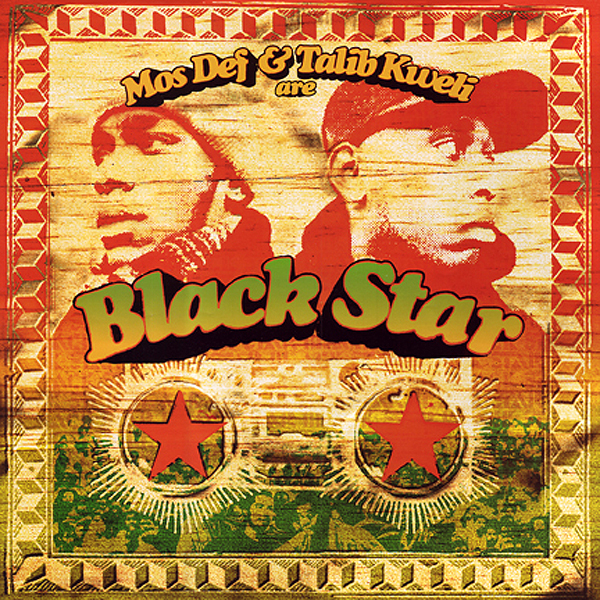
Back in the 90’s hip-hop was finally establishing itself as a concrete art form with more than enough substance to justify its existence. Artists were creating the music that they wanted to make and more often than not, poetically depicting the harsh lifestyles of the hood or experimenting with lyricism. All of that is fine and dandy and actually thrust the art into what many will defend as the golden age of hip-hop, but being concerned with progression, few were actually reflecting on its current state. This all changed in 1999 when two MC’s decided to postpone their debut solo projects and create one of the most eye-opening hip-hop albums of all time. Mos Def and Talib Kweli effectively took on the role of street prophets, laying down some of the most critical and lyrically sensical rap of the decade.

They didn’t just make songs about street violence or the value of money, but rather critiqued artistic glorifications and depictions of them, turning hip-hop on its head. From the very first track, save the intro, the duo bonded over the word black being used as a term of endearment rather than a limitation. It contains bass-heavy, funky guitar strings and impeccable flows from both Def and Kweli. Def swings the chorus with subtle back-up vocals from Kweli and it solidifies the equation for the remainder for the remainder of the album.

Then, on ‘Definition’, we get two rappers standing up for the hood as examples of what you can become, rather than simply reflecting on their rough upbringing. “Best alliance in Hip-hop”. Their words, also mine. I have yet to hear a hip-hop duo top the palpable chemistry between these two verbal acrobats. Their analogies bleed the wisdom of two guys who could deliver hip-hop-based sermons, “Me and Kweli close like Bethlehem and Nazareth.”

The boom-bap style reflects that of the classic and lethal combination of KRS-One and DJ Premier. Here though, it is Cincinatti-based producer Hi-Tek that helms a majority of the production. Its combination of rumbling bass guitars, snappy drums and and other low tones, roots the project’s sound in the years preceding it. The simple, organic tones allow the two MC’s to explode with multisyllabic rhyme schemes, occasionally even pushing out grocery lists of rhymable words one after the next like Kweli on ‘Brown Skin Lady’,

“You fruitful, beautiful, smart, lovable, huggable,

doable like art, suitable to be part,

of my life.”

Coming out at the end of a decade that showcased so much diversity in the genre afforded them the opportunity to take a little bit of everything from the musical buffet and put in on the plate that was their album. The colorfully playful, 80’s style that Eric B and Rakim came up on is resurrected on ‘B Boys Will B Boys’. They also allowed visions of the future to infiltrate their sound on the highly electronic synths of ‘Hater Players’. The album’s main exhibit is the lyrical proficiency and consciousness of Kweli and Mos Def. Its poetry that can be picked apart and listened to differently each time you hear it. Even sitting here now, realizing that this came out a ridiculous fifteen years ago, it is made all the more astounding that it is as eye-opening and as sonically pleasing as just about anything I have ever heard. Bar for bar, this is one of the greatest album’s of all-time.

 9.8

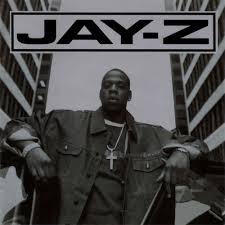
Throwback Thursday Review: Vol. 3…Life and Times of S. Carter | Jay Z

Jay Z Vol. 3
BY EVAN VOGEL

Rest easy Hova. Your song is safe. You may have 99 problems but a court case ain’t one.  A verdict has finally been reached on the copyright infringement case over chart-topping 2000 hit, ‘Big Pimpin’ was tossed by the presiding judge. So what better way to celebrate than by looking at the entire album in question, Vol. 3…Life and Times of S. Carter. Dropped mere days before the turn of the century in 1999, Jay Z invigorated the 2000’s before they even started.

Taking on a much more sinister and lethal persona than the previous two entries in this album series, it brings his hustler mentality to the forefront. He has clearly reached a point of success within the rap game by now and it affords him the opportunity to compare that lifestyle with that of a successful drug dealer. Starting off with a little well deserved “rap god” likenings in the introduction, we get an idea of how Jay looks down on the direction the industry is headed. Then, Jay rides a bouncy yet ominous piano arrangement accompanied by some classic DJ Premier scratches on ‘So Ghetto’. He may have topped the radio charts countless times, but the murderous lyrics remind us that Jay is not too far removed from his Brooklyn lifestyle.

Jay clever uses the metaphor of a court case to explain his unprecedented rise to the top of the rap game. Separated by the interjections of an MTV reporter, his verses come across as testimonies to the appeal his music has and how he is simply a successful product of Brooklyn’s systemic violence and poverty. A central theme becomes apparent in the form of how a young black gangster from “that off-limits part of town” all suburban kids grow up hearing about, came to make it even with every imaginable obstacle impeding his path. It’s a success story disguised as gangster music.

The album has some of the most overlooked production of Jay’s entire discography. The Mariah Carey assisted Swizz Beatz track, ‘Things That U Do’ has some of the most expertly implemented flute whistles that provide a smooth surface for Jay to lay what may be his most rhythmically articulate lyrics to date. The back to back Timbaland produced joints, ‘It’s Hot’ and ‘Snoopy Track’ incorporate his mastery over the electronics as Jay steps into new territory behind the sound of intensely distorted synths.

By the time we reach the song in question, Jay has cleverly aligned the Roc-A-Fella name with the depictions of a journey from dirt to dynasty. Weaving stories of women, money, drugs and the police often in the same song. It sounds like the epitome of what we don’t want from anymore rap artists but Jay manages to do it in a very self aware way on ‘Watch Me’. He glorifies splurging and spending stacks on ridiculous cars because there’s a good chance you could get killed by the system anyway. References to cops distributing drugs in the hood only to turn around and arrest or kill them right after can’t help but to maintain their relevance in a modern-day context.

Now, we reach the holy grail of controversy. Not only was it the subject of previously mentioned recent copyright case, but Jay himself has expressed his discontent with his own words. To this day I find it a hilarious example of the lack of attention people pay to the words in a song. How did a whole nation get behind a song where the first two bars are, “You know I thug em, fuck em, love em, leave em, Cause I don’t fuckin’ need em.” Looks plucked straight out of the misogynists handbook (which hopefully doesn’t exist). But here is the paradox – the combination of the flow that is uttered and the instrumental are fantastic. Both catchy and infectious, I can still put this on at a party today and not a single person expresses any lack of satisfaction; it sounds really good.

Then our ears are geared back to the conscious hustler Jay, as he discusses the ability to connect with deaths in the hood on ‘There’s Been A Murder’, while still being looked at as hard as ever. Even thugs cry. Then he reestablishes his realness and that of his neighborhood on ‘Come And Get Me’ and ‘NYMP’. No matter the environment, be it the harsh streets of Brooklyn in the late 20th century or a studio with a microphone, Jay Z had proven his dominance in his crafts with the best sounding album he had released up to this point.

8.6

Album Review: All Love Lost | Joe Budden

joe-budden-all-love-lost-cover
BY EVAN VOGEL

Wow. Just had to get that out of the way at the beginning here, it’ll make more sense by the end. Anyway, most fans will remember at least two things for certain. The classic, four-part, Mood Muzik series that trademarked Budden’s style which was rooted in his tenacity to create soul-baring music that revealed more about life than most artists can experience by the time their ‘greatest hits’ lands on the shelves — and then there was the incredibly underwhelming No Love Lost in 2013. Occupying opposite sides of the quality spectrum, these projects seemed to represent two different artists. One, an honest, intelligent craftsman of the english vernacular and the other, a byproduct of a saturated industry built on expectations.

Continue reading Album Review: All Love Lost | Joe Budden

Throwback Thursday Review: The Documentary | The Game

The Documentary
BY EVAN VOGEL

Whether you hate it or love it, The Game’s debut album, The Documentary in 2005 brought the grit and recognition back to West Coast gangster rap. Hip-hop’s landscape was already well under construction by the mid 2000’s. Artists with completely new and previously unheard sounds came into the fray. Perhaps concerned with hip-hop’s recent transgression into the mainstream lighthearted playfulness, The Game’s approach was more primitive and raw. His sound was undeniably aggressive and unapologetic, creating a new sound for the streets – or perhaps simply resurrecting pieces of an old one.

The streets lent themselves to all aspects of Game’s persona. From his voice, which could crack pavement to his lyrical hood life braggadocio, nothing sounds like a false front. The most intriguing of this album for me is the juxtaposition of Game’s gritty street life divulgences and the million dollar sound of the production. At the time, it seemed as though everyone was at Game’s side, made evident by the album’s final production credits. Seven productions from Compton godfather, Dr. Dre only to be accompanied by cuts from Kanye West, Timbaland, Just Blaze and Eminem helped to diversify our cohesive view of Compton through the eyes of one of its loneliest sons.

The music traversed a smorgasbord of traditional and more current hip-hop sounds. From the classic g-funk laden synths of “Higher” to the pulsing eclectic rhythm of Timbaland’s handiwork on “Put You On The Game”. Needless to say, there were lots of heads for The Game to impress. And impress he did. He didn’t use intricate lyrical or rhythmic patterns to dazzle, but instead let gangster vernacular fly off the hinges, forming a white-chalk outline of his uncertain path.

It’s lines like, “I find out who sprayed and I’m putting you under the pavement. No Buddhist, priest or Catholic path that can save ‘em.” That instill both the fear and fearlessness of the hood within you. It’s darkly beautiful music that more often than not, you’ll either be bobbing your head or jumping up and down on the rooftops to. The song construction is varied but works best when Game sticks to the verses and passes the authority of the choruses off to 50 Cent and Nate Dogg. I don’t know if it was the presence of all the greatness around him or simply a matter of respect but Game name drops people throughout this album like a person trying to fanboy his way to legend status. Shaq, Yao Ming, Dr. Dre, Eminem, Rakim, Lebron, Randy Moss, Biggie, no one is safe. The name drops don’t necessarily detract from the quality of the album due to their clever use as a timeline of how long Game has been rapping, but they do take up precious space that could have been used to tell more compelling stories.

In the end though, we get all that we came for and much, much more. That resurgence of gangster rap with all its incantations and street hardiness being present. Any skeptics of the West-coast’s relevance were quickly reassured of its liveliness thanks to this album, that sonically, is one of, if not the best sounding album since Dr. Dre’s, 2001 in ‘99.  Who would have thought that such a revitalizing project would come from a bunch of the art form’s biggest influences rallying around someone, who was discovered by Dr. Dre. and at the time was an unknown MC from Compton? Not I, but it most definitely did.  

8.6